Mokume Gane
Combination of Great Beauty and Artist Intention
People have always appreciated beauty and uniqueness in all
things. This appreciation is perhaps most evident in jewelry.
Jewelry has always been a form of self-adornment as well as
self-expression. Humans, with their long history with jewelry,
have always treasured whatever piece of jewelry they possess both
for their beauty and uniqueness, and for their value.
There are many ways of crafting jewelry. Some methods are more
modern while others are infused heavily with tradition and the
knowledge of which is handed down from generation to generation.
Some methods put a twist in the old ways, and what was old becomes
new. The method of making Mokume Gane jewelry is just one example
of old traditions being fused into new ones.
What is Mokume Gane?
Mokume Gane is a Japanese term that literally means "wood eye
metal." It is an old method of metalworking that was invented in
the 1600s by master metalworker Denbei Shoami and was used to
create adornments on the handles and the hilts of katana, the
swords used by the samurai class in medieval Japan. The samurai
class was once the ruling class of Japan in its medieval ages, and
even within that class, status and wealth are important. Such
marks of status and wealth can be seen in the adornment of their
katana.
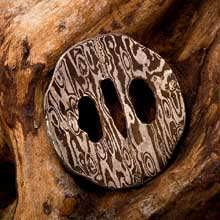
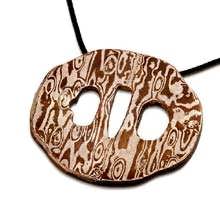
The method of adorning metal with the use of Mokume Gane results
in patterns on the metal that mimics burls or grains on wood. It
is a beautiful and unique pattern that somewhat echoes the harmony
of nature as embodied in wood, but with the strength and polish of
metal.
The samurai class may all be dead in this modern age, and the
demand for katana is now limited to collectors and to people who
practice martial arts as some sort of hobby. Nonetheless, the art
of metalworking embodied by the Mokume Gane endures. It is now
used to create fine, unique jewelry and other objects of art.
The Process of Making Mokume Gane
Traditionally, the process of making Mokume Gane involves the
fusion of different sheets of metal alloys. Modern creators of
Mokume Gane jewelry and art objects have introduced changes to the
traditional ways, but nonetheless, the basic process remains the
same.
Originally, gold, copper, and silver are the metals used in making
Mokume Gane, although today, metals considered to be
non-traditional in this form of metalworking are now included as
well. These non-traditional metals include titanium, platinum,
iron, nickel, and bronze.
Basically, what happens in the process of making Mokume Gane is
that sheets of metal with different colors are layered together in
such a way that these sheets would fuse together but not
completely melt and meld together. This fusion is created with
controlled heat and pressure. These fused sheets of metal would
result in a solid block of metal with stripes, called a
billet. After the billet has been formed, it is usually
hand-cut to produce the desired wood-burl patterns. The
modern technique makes use of computer software to guide the
metalworker in carving out the desired patterns.
After the patterns have been cut, the billet is then hammered,
forged and rolled to flatten it and to reduce its thickness. Then,
it is shaped to whatever object the metalworker desires it to be,
be it for jewelry or any other objet d'art.
The Beauty of Mokume Gane Jewelry
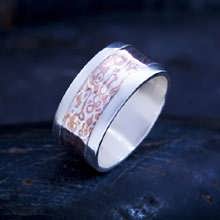
The art of making Mokume Gane jewelry is derived from the ancient
art of adorning swords. Jewelry made in the Mokume Gane
style nonetheless has a look to it that is contemporary,
comparable to pieces made during the art deco era.
Mokume Gane Jewelry
About the Author
David Weitzman
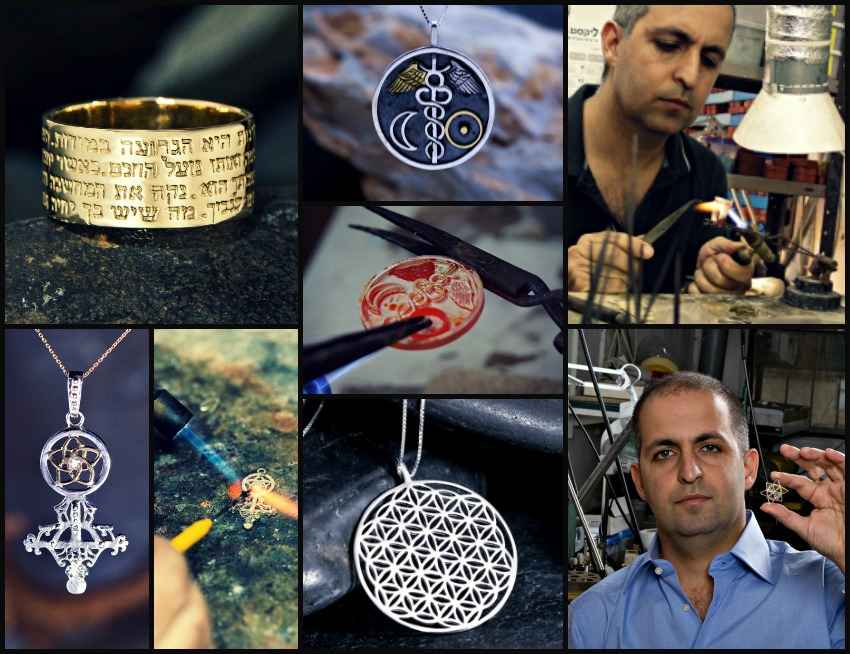
The jewelry artist David Weitzman combines ancient and sacred knowledge into a unique line of jewelry designed to bring people both beauty and inspiration. David's artwork harnesses the power of spiritual symbols and sacred geometry from around the world to bring those wearing this sacred jewelry happiness, vitality, excitement, and love.