Common Artistic Forms in Sacred Geometry
Shapes
that goes far beyond...
The study of sacred geometry has always been a fascinating one, both from a
scientific and a spiritual point of view. There are times when people
who have taken to advocating one facet of sacred geometry scoff at the people
on the other side of the fence. Nonetheless, it cannot be denied that
the study of sacred geometry, whether for scientific or spiritual purposes,
is something that can blow the mind away.
What is Sacred Geometry?
Since there are two ways of looking at sacred geometry, there are also two ways
of defining it. One is finite and academic while the other is spiritual.
Defining sacred geometry in the finite and academic way has a lot to do with
studying the mathematics and algorithms to be found in the geometric shapes
considered to be sacred and holy. These shapes are thought to occur naturally
and can be seen in some creatures and forces of nature.
On the other hand, the spiritual viewpoint involved in sacred geometry tries
to go beyond the mathematical and algorithmic formulas. They use sacred
geometry to find meaning and significance in the pattern of the universe.
You Don't have to be a mathematician or a practitioner of geomancy to be able
to appreciate sacred geometry. Sacred geometry exists as an art form, and for
the layman who does not want to take any side, it can be appreciated as such.
Sacred Geometry in Art
You can find elements of sacred geometry in almost any art form, but they are
most prominent in art forms related to
sacred art and architecture - churches, temples,
meeting places, iconographies, altars, mosques, monuments and such.
Sacred geometry actually
transcends culture and religion; some figures that are found in the holy
places of one religion can be found in another, and often they carry the same
meaning across religions and culture.
Some common artistic forms in sacred geometry are:
The circle
The circle is the simplest of shapes in both Euclidean geometry and sacred geometry.
It is a figure formed by connecting the points radiating in equal distances
from one defined center. The circle is seen in many other forms of sacred
geometry. It is always meant to signify unity and oneness.
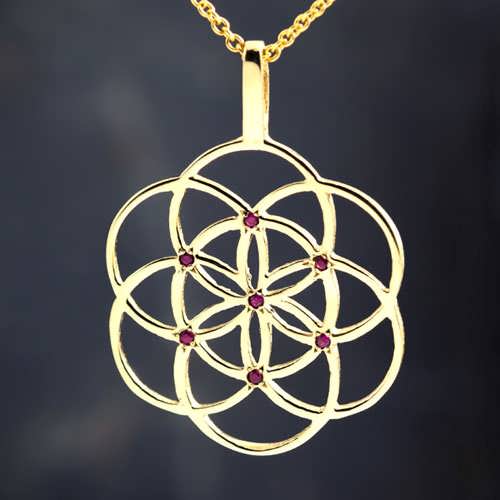
Seed of Life Article
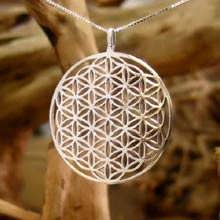
The Flower of Life
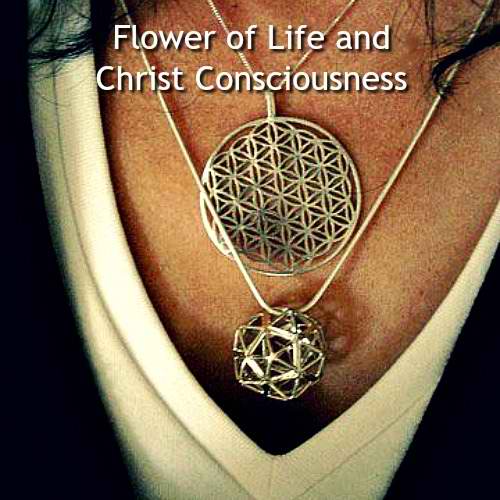
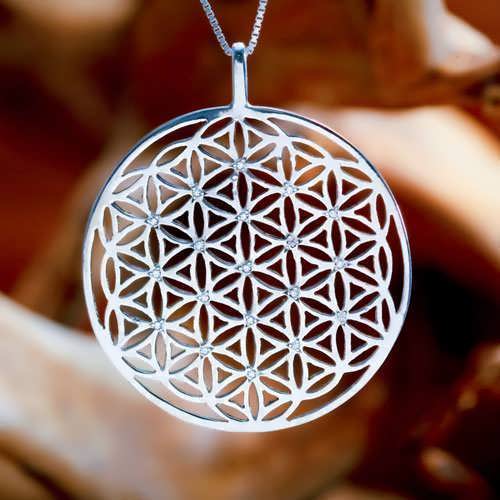
The Flower of Life refers to a geometric figure that is created using overlapping
circles of the same circumference. The overlapping is done in such a way
that the center of each circle is a point on the circumferences of six circles
surrounding it. The end result is a geometric pattern that looks like
a flower with a hexagonal shape.
Flower of Life Article
There are many other forms in sacred geometry that are said to have been derived
from the
Flower of Life, such as
the
Tree of Life, the
Seed
of Life, the
Borromean rings,
the
tube torus, the
Egg of Life and
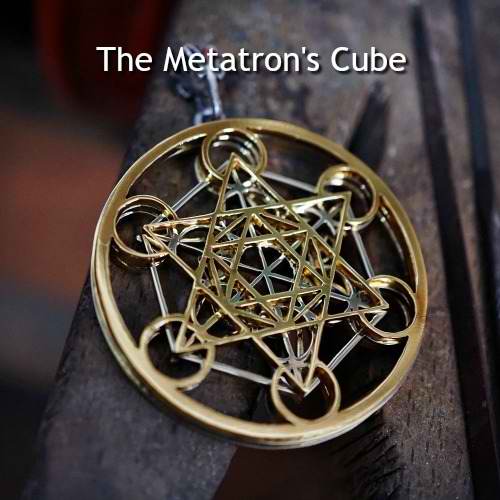
Metatron's
Cube.
Vesica Pisces
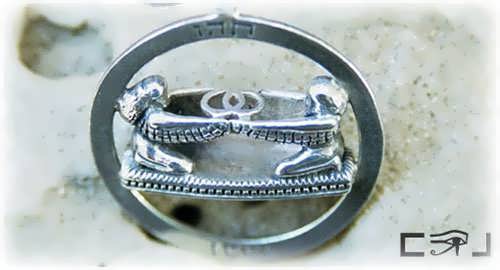
The vesica pisces literally means fish in Latin. It is created by drawing
two circles of the same circumference and overlapping in such a way that the
center of one circle is part of the circumference of the other. The vesica
pisces is prominent in Christian art, where it has become one of the symbols
associated with the Christ.
Vesica Pisces Article
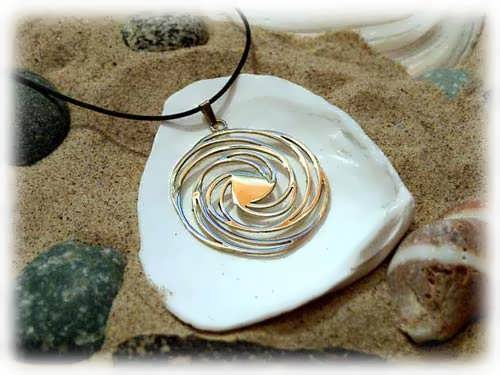
The Golden Spiral
The Golden Spiral is a spiral whose growth is represented by the golden ratio,
also known as the phi. The most common representation of the golden spiral is
the nautilus shell.
Golden Spiral Article
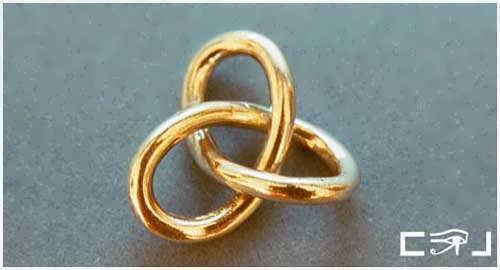
The Torus Knot
The Torus Knot is also referred to as the doughnut. It is the shape formed when
a circle is made to travel another circular path on a three-dimensional plane.
Gordian Knot Article
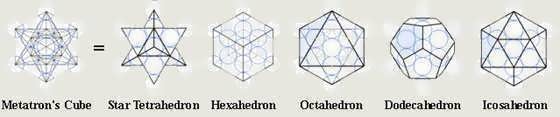
It is also very important to mention the five
Platonic
solids as part of the sacred geometry shapes.
It does not really matter whether one believes in the spiritual nature of sacred
geometry or is merely interested in the mathematics involved in it. It is easy
to appreciate sacred geometry for their artistic merits alone
Related category
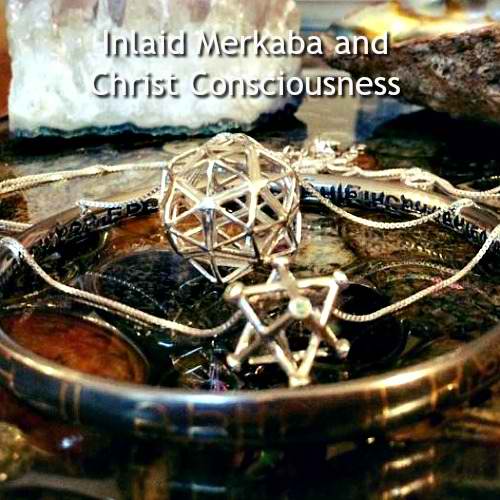
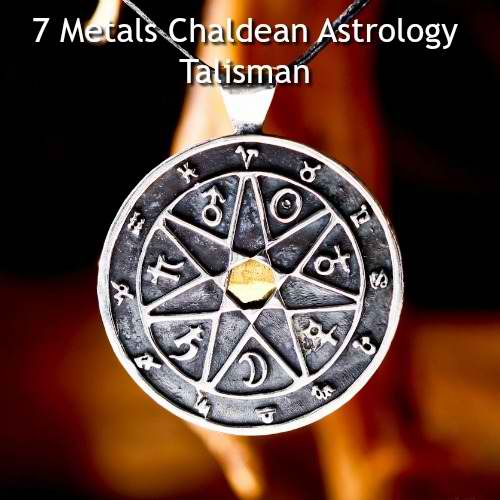
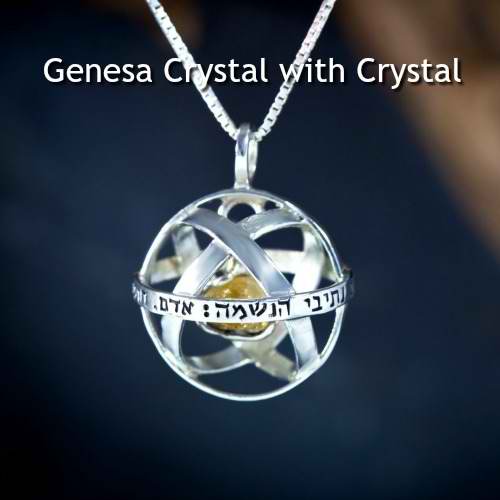
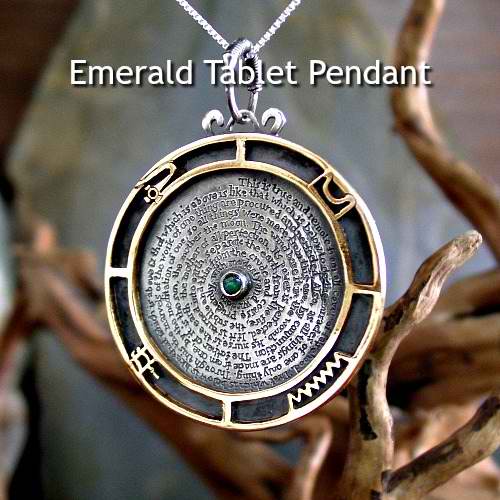
Sacred geometry Jewelry
About the Author
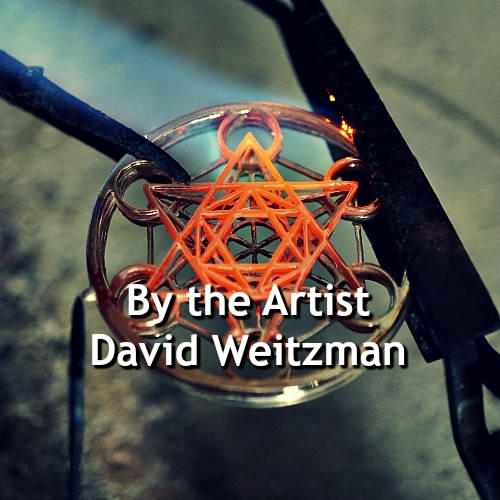
David Weitzman
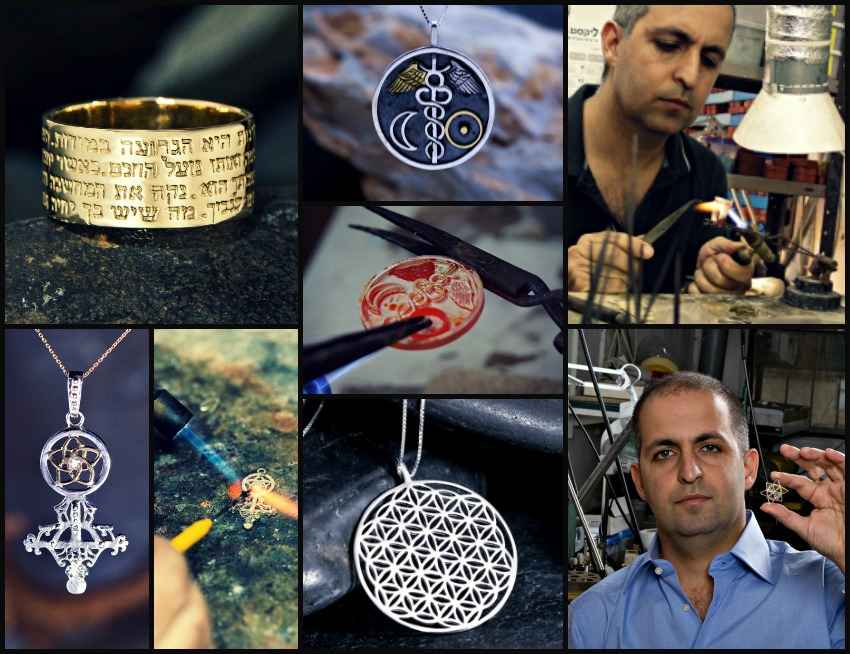
The jewelry artist David Weitzman combines ancient and sacred knowledge into a unique line of jewelry designed to bring people both beauty and inspiration. David's artwork harnesses the power of spiritual symbols and sacred geometry from around the world to bring those wearing this sacred jewelry happiness, vitality, excitement, and love.